Why Fall Is the Best Time to Fix Sunken Concrete Before Freeze-Thaw Season
If your driveway, sidewalk or front steps settled a little this year, the next few months can make it a lot worse. In the Midwest, winter doesn’t just bring snow. It brings dozens of freeze-thaw cycles, and each one puts sunken concrete under more stress.
The good news is that fall is the ideal window to fix it. Here’s why.
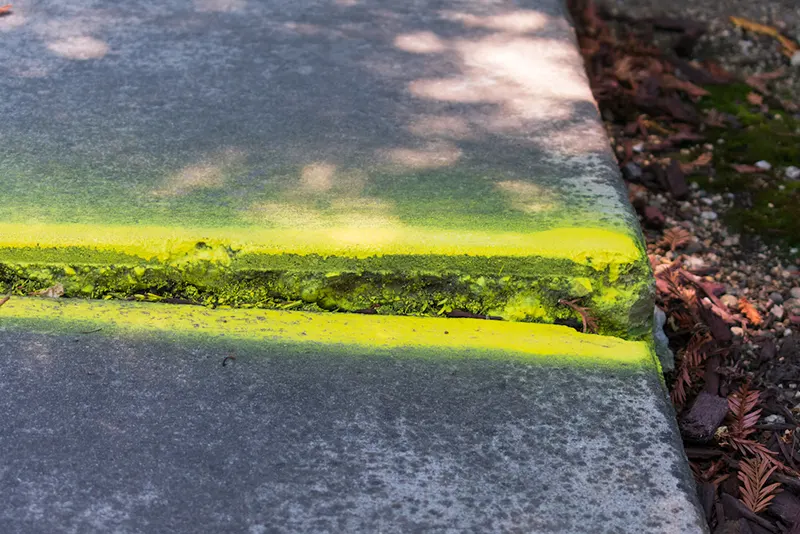
What freeze-thaw actually does to concrete
Concrete is porous. Rain and melting snow soak into it and into the soil underneath. When temperatures drop below freezing, that water expands by about 9%. When it thaws, it contracts again.
On a solid, level slab, that’s manageable. But when a slab has already sunk or tilted, a few problems stack up:
- Water collects where it shouldn’t. A low spot or a slab that tilts toward the house holds water, so more of it freezes in place.
- Gaps let water underneath. Uneven joints and separated slabs let water run under the concrete, where it freezes and pushes up, then thaws and leaves voids behind.
- Edges and corners crack. A slab that isn’t fully supported flexes every time the ground heaves, and the weakest points break first.
Central Indiana can see well over 50 freeze-thaw cycles in a typical winter. Each one is a small push on any concrete that’s already out of place.
Why fall beats spring
Most homeowners notice sunken concrete in spring, after winter has already done its damage. Fixing it in the fall gets ahead of that.
- The ground is still workable. Concrete lifting needs soil that isn’t frozen solid. Fall gives you a comfortable window before the hard freezes set in.
- You stop the water problem before winter. Lifting the slab back to level restores drainage, so water runs away from your home instead of pooling against the foundation.
- You fill the voids now. The material used to lift the slab also fills the empty spaces underneath, so there’s no hollow pocket for ice to form in.
- You remove the trip hazard before it’s icy. A raised sidewalk edge is a problem in July. Covered in snow in January, it’s a fall waiting to happen.
- Contractors are easier to schedule. Spring is the busiest season for concrete lifting. In the fall, you can often get on the schedule faster.
Signs your concrete should be looked at this fall
- A gap of more than a quarter inch between slabs
- Water pooling on the driveway or near the garage after rain
- A sidewalk or patio that slopes toward your house
- Front steps pulling away from the house
- Cracks that have grown since last year
Lifting beats replacing
In most cases, sunken concrete doesn’t need to be torn out. Concrete lifting raises the existing slab back to level by injecting material underneath it. Polyurethane foam is a popular choice because it’s lightweight, waterproof and cures quickly, so you can usually use the surface the same day. It typically costs a fraction of replacement.
If you’re in Mid-Michigan, where winters are even longer and harder on concrete, Lift Rite Leveling is a good team to call. They lift driveways, sidewalks, steps, patios and garage floors with high-density polyurethane foam across the Flint, Saginaw and Great Lakes Bay areas.
Don’t wait for spring
Winter won’t fix sunken concrete. It only makes it worse. A quick inspection this fall can tell you whether a slab needs attention now, and lifting it before the first hard freeze protects your concrete, your foundation and anyone walking on it.

